

PODCAST WITH

Real conversations, practical wisdom, and encouragement for women embracing change at every stage.
Available on...





"Women's pain is not a personal failure. It's not weakness. It's not something wrong with you."
EPISODE 08.
What 30 Years of Women's Pain Has Taught Me
Oxygen for Women Podcast
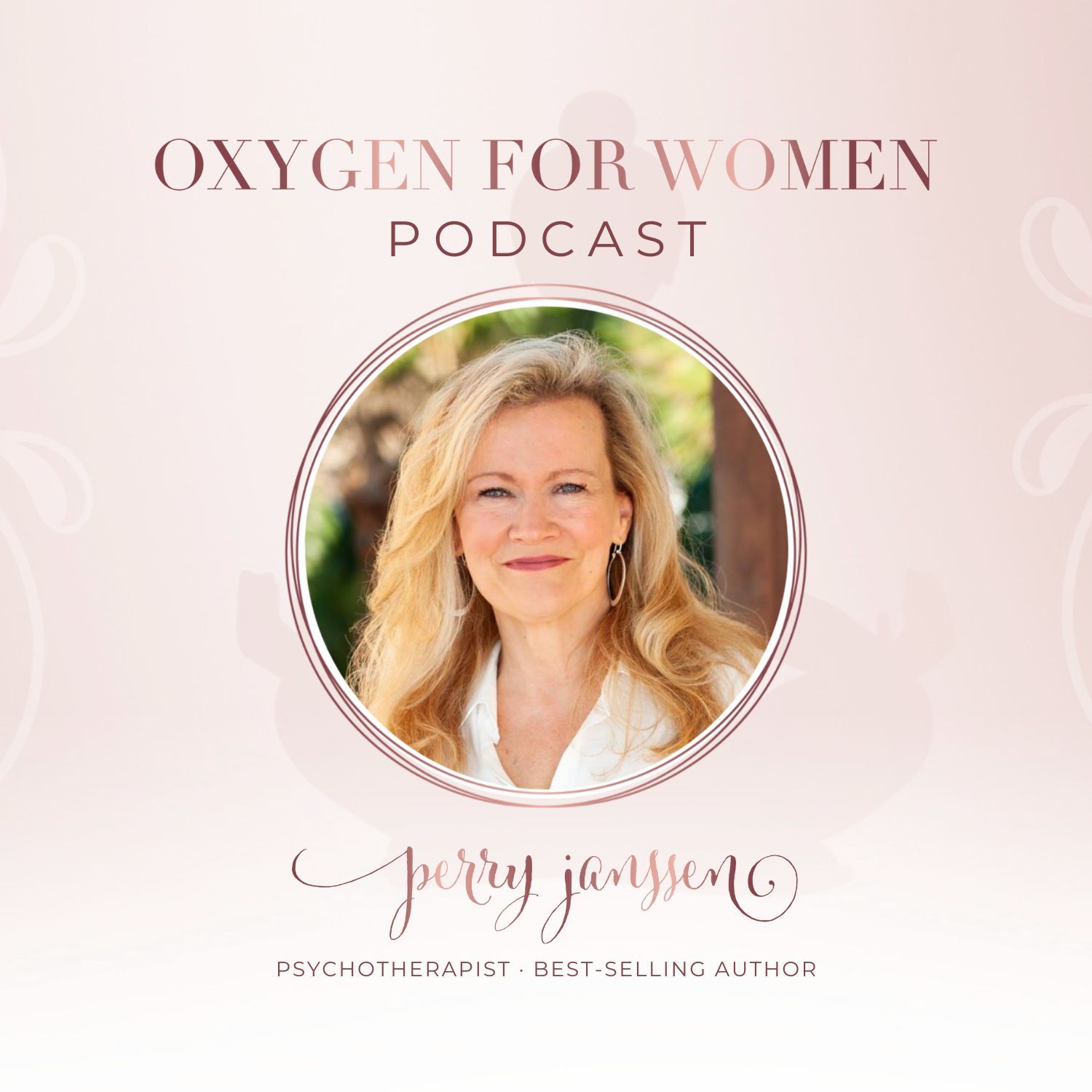
with Perry Janssen
For more than 30 years, women have sat across from Perry and shared their stories—their exhaustion, heartbreak, shame, anger, trauma, and the fear of being too much or never being enough.
This episode distills the profound lessons learned from three decades of listening to women's pain. Perry shares that women's pain is not personal failure or weakness. It's often a response to living in a world that's asked women to bend, shrink, endure, and disappear to belong.
This is not theory. It's truth learned from real lives, real bodies, real spirits, and real hearts.
Core Message
Women's pain is not a personal failure. It's not weakness. It's not something wrong with you. So much of it is a response to living in a world that's asked women to bend, shrink, endure, and disappear in order to belong.
Key Lessons from 30 Years
- What We Call Symptoms Are Often Messages
- What we call symptoms are often communication
- What we call breakdowns are often breakthroughs trying to happen
- What we call "too sensitive" is often deep intelligence living in a very insensitive culture
- Women's Pain Is Layered and Collective
Women's pain was never just individual—it's layered:- Generational
- Cultural
- Relational
- Historical
- Sometimes individual, but more often collective
Women carry stories that didn't begin with them
-
- Mothers who had no voice
- Grandmothers who endured silence
- Bodies that learned to hold fear instead of express it
- Hearts that learned to survive by becoming small
The repeating message underneath: "I'm not enough. I'm too much. I've got to try harder. I must not need so much."
This belief didn't come from inside women—it came from a world that taught them their worth was conditional on being good, thin, beautiful, pleasing, quiet, strong but not too loud, and not taking up too much space.
Women didn't break—they adapted. Adaptation looks like perfectionism, caretaking, over-functioning, disappearing, and being the strong one, the nice one, the pleasant one, or the one who holds everything together. Not because they wanted to lose themselves, but because they wanted to belong, be seen, be heard, be loved, and stay safe.
- Emotions Aren't the Enemy—They're Communication
Women were taught to reject or fear their feelings:- Don't be angry, needy, sad, dramatic
- Don't feel too deeply
- Don't be hysterical
What happened instead:
-
- Anger turned into anxiety or numbing
- Grief turned into depression
- Fear turned into control
- Longing turned into exhaustion or cravings
- Overwhelm turned into illness
But emotions are not mistakes—they're communication:
-
- Anger says, "Something's not right."
- Grief says, "Something deeply mattered."
- Fear says, "I need safety."
- Sadness says, "I need care."
- Longing says, "There's more for me."
When women finally had permission to feel and be in their bodies, the body softened from defense, breath deepened, symptoms began changing, lives shifted, and inner empowerment began to grow.
The body had been trying to tell the truth all along through tension, fatigue, panic, pain, and numbness. The body is not betraying you or the problem—it's trying to protect and communicate to you, saying, "Please listen."
- Stress Culture Disguises Itself as Virtue
Many women were taught:- Exhaustion means you care
- Self-sacrifice means you love
- Overworking means you're worthy
- Holding everything together means you're strong
The reality: Women collapse under impossible expectations—working, mothering, caring for parents, managing relationships, and being emotionally available to everyone while ignoring their own inner lives (which is learned, not innate).
Stress culture taught women to live in constant urgency—push through, numb out, survive, have that glass of wine, and get through it.
Eventually, the body says no through burnout, anxiety, autoimmune illnesses, depression, panic, and fatigue. These aren't failures—they're signals that something has to change.
- Trauma Is Not Always What We Think
Many women say, "But nothing really bad happened to me."
Yet their bodies are tense, nervous systems are on high alert, hearts are afraid, and lives are constricted.
Trauma doesn't always come from one big event. It comes from:- Not being seen
- Not being protected
- Not being emotionally met
- Being too responsible too young
- Living in chronic stress
- Being silenced, shamed
- Being taught that your feelings are wrong or invalid
Trauma is what happens inside of us when we have to survive without support.
Survival patterns look like:
-
- Hyper-independence (a very strong trauma response)
- Perfectionism
- People-pleasing
- Shutting down
- Staying small, busy, numb
- The inner critic/judge/shamer on steroids, like a Greek chorus in your head
These aren't character flaws—they're nervous system strategies.
- The Deepest Pain: Disconnection from Self
Under everything Perry heard for 30 years was this ache:- "I don't know who I am anymore."
- "I don't know what I want or what I like."
- "I don't know what my purpose is."
- "I don't feel connected to myself anymore."
Women had lost touch with:
-
- Their bodies and voices
- Their creativity ("I'm not an artist. I can't do that. I'm not good at anything.")
- Their joy
- Their intuition (women are highly intuitive, but disconnection from self impairs this ability)
- Their truth
- They were functioning but not alive, coping but not fully connected, surviving but not fully free.
- Healing Is Remembering, Not Fixing
Healing is not about fixing women—it's about helping them remember:- Who they were before they learned to shrink
- Who they were before they learned to silence themselves
- Who they were before they learned to survive instead of fully live
Healing is a return to the body, breath, voice, truth, heart, and self—as well as the wounds. Healing is about bringing presence to your own wounding.
A New Story for Women
Women don't need to become someone else—they need to become themselves, to come home to themselves.
It's not about finding a "best self" or "getting better"—it's about rediscovering who we were in our original form, because it is there. Like an artichoke, we just need to peel back the layers to get to that true heart, that true self.
What Women Need:
- Not more pressure—more permission
- Permission to rest, feel, say no, take up space, be real, be whole (wounds and all)
Reframing Women's Emotions:
- Women's anger is not dangerous—it's boundary energy meant to protect you and help you attune to your own being
- Women's grief is not weakness—it is deep love that still lives
- Women's longing isn't selfish—it's truth calling you forward
When women begin to listen to their bodies, honor their emotions, and express what was never allowed, something miraculous happens—not just in them, but in the world around them. Women in healing don't live from fear—they live from truth, connection, inner presence, and compassion.
Message to Listeners
If something inside you feels seen:
- There is absolutely nothing wrong with you
- Your exhaustion makes sense
- Your emotions make sense
- Your longing makes sense
- Your pain makes sense—it has a story and deserves care, not criticism
About Oxygen for Women
This is why Perry created Oxygen for Women and the podcast—a place where women step out of stress culture, toxic standards, and pressure and back into themselves.
Through embodied practices, creative expression, emotional intelligence, and compassionate community, women begin to restore what's been lost to years of coping and surviving.
It's not about fixing you—it's about helping you remember who you are.
Join the monthly restoration at oxygenforwomen.com
Powerful Quotes
"Women's pain is not a personal failure. It's not weakness. It's not something wrong with you."
"What we call symptoms are often messages. What we call breakdowns are often breakthroughs. What we call too sensitive is often deep intelligence living in a very insensitive culture."
"Women didn't break—they adapted."
"Emotions are not mistakes. They're communication."
"The body is not betraying you. It's trying to protect you. It's saying, 'please listen.'"
"Stress culture taught women to believe exhaustion means you care, self-sacrifice means you love, and overworking means you're worthy."
"Trauma is what happens inside of us when we have to survive without support."
"These aren't character flaws—they're nervous system strategies."
"Healing is not about fixing women. It's about helping them remember who they were before they learned to shrink themselves."
"Women don't need to become someone else. They need to become themselves."
"Women don't need more pressure. They need more permission."
"When women come home to themselves, they don't just heal—they reclaim their lives. And this isn't selfish; it's necessary. And it's time."
Closing Reminder
Liberation. When women come home to themselves, they don't just heal—they reclaim their lives. And this isn't selfish; it's necessary. And it's time.
Oxygen for Women: Where psychology meets spirituality and healing meets real life.
DOWNLOAD THE EPISODE TRANSCRIPTSubscribe for weekly episodes
and get it delivered right into your inbox!
Oxygen for Women is your weekly dose of inspiration and actionable strategies designed for the modern woman.

Download the Free Guide & Somatic Practice
Let’s give you the education you needed the most and didn’t get. Here is the #1 proven practice for navigating burnout, stress patterns, and feeling stuck to empower you and strengthen your resilience, peace, and joy of life.
